


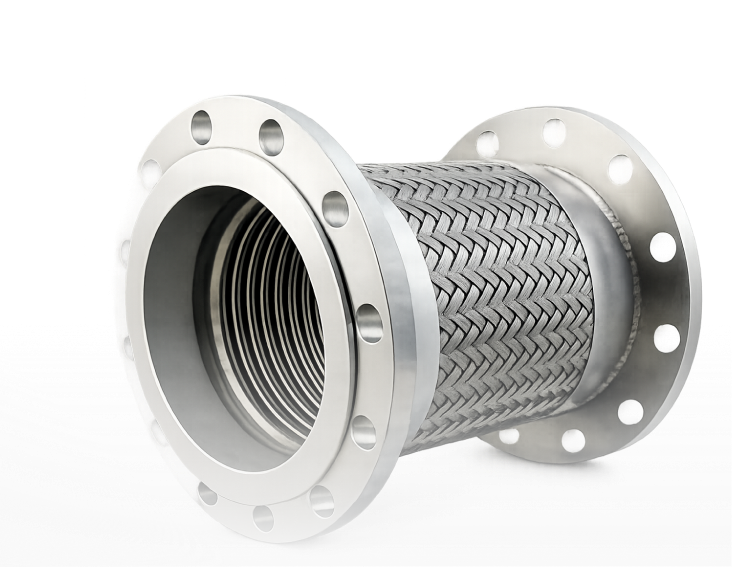
In industrial piping systems that transport liquids or gases, major components like pumps, valves, and the pipes themselves usually get all the attention. However, there is a hidden hero working behind the scenes to protect the entire system from structural failure: the Expansion Joint (Vibration and Thermal Expansion Compensator).
If you are wondering why your plant strictly needs to install Expansion Joints and what happens if you skip them, here are the technical insights you need to know.
1. Vibration Absorption
Industrial machinery, such as large water pumps, compressors, or motors, generates continuous vibration during operation. If the piping is rigidly connected without flexibility, these vibrations travel directly through the system, causing metal fatigue. This eventually leads to cracked pipes, ruptured welds, or loosened flange bolts.
-
How an Expansion Joint Helps: Highly flexible joints—whether made of rubber or stainless steel bellows—act as an isolation barrier, absorbing these vibrations and preventing them from traveling down the pipeline.
2. Thermal Expansion and Contraction
According to fluid dynamics and physics, when pipes transport high-temperature fluids (such as steam or hot water) or extremely cold fluids, the pipe material naturally expands or contracts.
-
Without Expansion Joints: Rigidly fixed pipes have no room to move. This physical constraint causes the pipes to buckle or push against end equipment with massive force, resulting in catastrophic failure.
-
With Expansion Joints: The joint absorbs axial movement by compressing or extending itself, allowing the pipeline to safely handle temperature fluctuations without putting stress on the system.
3. Misalignment and Structural Settling
In real-world installations, pipelines running across long distances rarely stay perfectly straight. Over time, building structures and pipe supports can also settle, causing the pipeline to become misaligned.
-
How an Expansion Joint Helps: Expansion joints can flex laterally or angularly. This flexibility compensates for structural shifting and installation tolerances without creating concentrated stress points in the piping network.
Summary: The Risks of Skipping Expansion Joints
Neglecting to install expansion joints, or choosing the wrong specifications, can lead to costly consequences:
-
Unplanned Production Shutdowns: Caused by sudden fluid leaks or pipe ruptures, leading to lost time and revenue.
-
Workplace Hazards: If the pipeline carries high-pressure steam or hazardous chemicals, a rupture can cause severe accidents.
-
Excessive Maintenance Costs: Frequent replacements of pumps, valves, or entire pipe sections.
THAIFLEX Recommendation: Selecting between a rubber expansion joint and a stainless steel bellows expansion joint requires a detailed analysis of your fluid type, operating pressure, and system temperature to ensure maximum safety and product lifespan.