


Rubber Hose / Oil Rubber Hose




Primary Application
-
Petroleum Product Transfer: Specifically designed for the suction and discharge (delivery) of refined petroleum products, diesel, gasoline, paraffin, and industrial oils.
-
Aromatic Content Compatibility: Optimized to safely convey hydrocarbons and fuels with an aromatic content up to 30%.
-
Industrial Utility: Ideal for tank truck operations, fuel depots, in-plant processing lines, and distribution networks where flexibility and reliable hydrocarbon resistance are essential.
Structure & Specifications
-
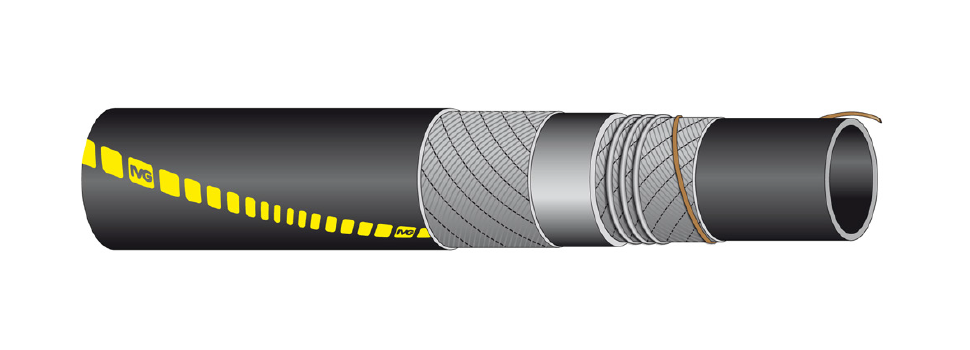
Hose Tube: Smooth, black synthetic rubber (Specially compounded to resist swelling and degradation from contact with petroleum products and oils).
-
Reinforcement: High-strength synthetic cord and an integrated steel wire helix (Engineered to maintain structural shape under high vacuum suction and eliminate kinking).
-
Hose Cover: Synthetic rubber designed to be highly resistant to weather, ozone, and abrasion.
-
Size Range: 3/4″ to 4″
-
Brand: IVG Colbachini (Italy)
Operating Temperature Or Condition
-
Working Pressure: Rated for continuous pressure delivery up to 10 bar.
-
Vacuum Rating: Fully rated for suction and vacuum operations at 0.9 bar (without collapsing).
-
Temperature Range: Safe operational range from -20°C to +70°C.
Key Features & Benefits
-
Hydrocarbon Resistance: The specialized inner liner chemistry ensures that the hose remains durable and does not degrade or flake when exposed to commercial fuels containing up to 30% aromatics.
-
Dual Suction & Delivery Engineering: Reinforced with a robust steel wire helix, this hose handles high-pressure pumping discharge just as efficiently as heavy-duty vacuum suction.
-
Rugged External Cover: The external synthetic rubber cover protects the entire hose structure against dragging wear over rough concrete, atmospheric weathering, and ozone cracking.